 By carl
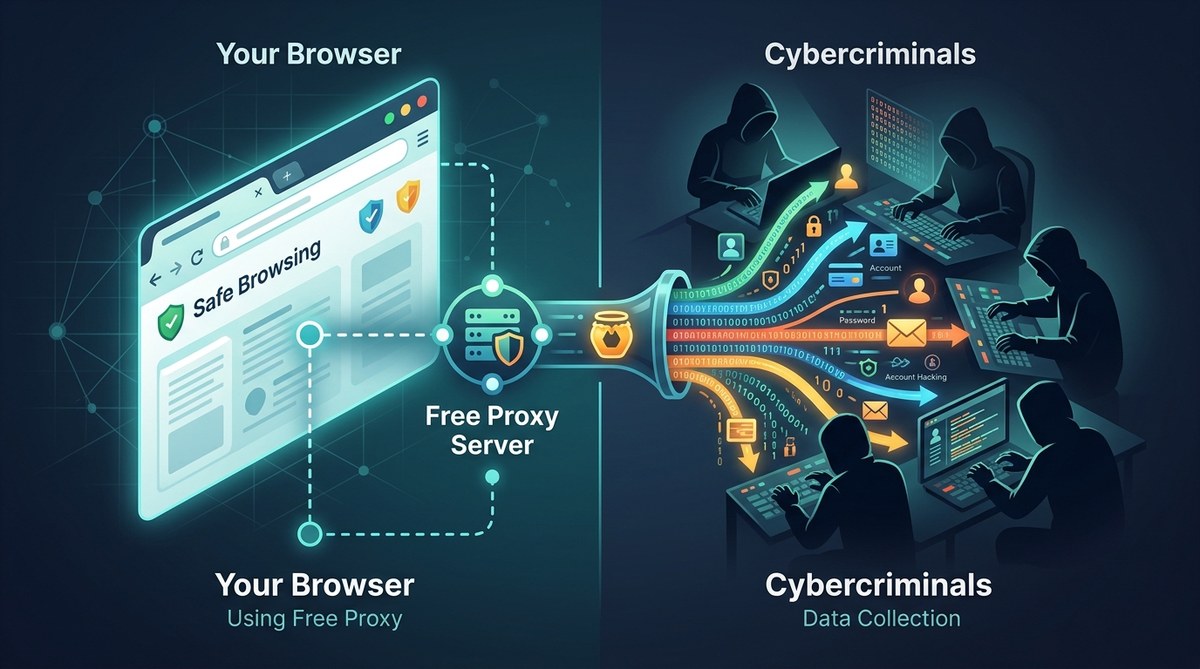
You found a free proxy server. It promises to hide your IP address, let you watch that show, and keep your browsing secret. The price is right. What could possibly go wrong?
Plenty. In fact, the moment you route your traffic through a free proxy, you might be handing your most sensitive data directly to someone who wants to steal it. That free server isn’t a gift. It’s a trap, and you’re the one walking into it.
This guide breaks down exactly why free proxies are so dangerous, how attackers turn them into data-stealing machines, and what you can do to stay safe without sacrificing your privacy.
The Real Cost of “Free” Proxy Servers
Running a proxy server costs money. Someone pays for the hardware, the bandwidth, the power, and the maintenance. When a service offers that to you for free, they’re not being generous. They’re running a business where you are the product.
Here’s how that business model usually works:
Your traffic is the inventory. A proxy sits between your browser and the websites you visit. Every unencrypted request, every login form, every cookie, and every bit of personal data flows through that server. A malicious operator can read, log, and sell all of it.
Your device is the asset. Some free proxies don’t just watch your traffic. They inject ads, redirect you to phishing pages, or even try to install malware on your machine. Your computer becomes a tool for their next attack.
Your trust is the commodity. Once a free proxy gains your trust, you’re more likely to enter passwords, credit card numbers, and other sensitive information. Attackers know this. They build convincing-looking services specifically to harvest that data.
The simple truth is that a free proxy is rarely just a helpful tool. It’s often a surveillance operation with a nice interface.
What Free Proxies Do With Your Data
When you connect through a free proxy, you’re giving that operator a front-row seat to your online life. Here’s what they can capture:
Unencrypted HTTP traffic. If you visit a site that doesn’t use HTTPS, the proxy sees everything: search terms, page content, form submissions. Even with HTTPS, the proxy can see which domains you’re visiting, which reveals a lot about your interests and activities.
Passwords and login credentials. If you log into any account while connected through a malicious proxy, the operator can capture those credentials. They can then sell them or use them to take over your accounts.
Session cookies. Websites use cookies to keep you logged in. If a proxy operator steals your session cookie, they can impersonate you without ever knowing your password. This is called session hijacking, and it’s one of the most dangerous risks of using an untrusted proxy.
Personal information. Your IP address, your approximate location, your device type, your browser version, and your browsing habits are all valuable data. This information gets compiled into a profile and sold to advertisers, data brokers, or worse.
Financial details. If you shop online while connected through a malicious proxy, the operator can capture your credit card numbers, billing addresses, and other financial information.
The data isn’t just collected. It’s actively used. Free proxy operators often sell access to their botnet, which is a network of infected devices they control. Your computer could become part of that botnet, sending spam or attacking other systems without you ever knowing.
How Attackers Build and Run Free Proxy Networks
Free proxy networks are rarely the work of a single person. They’re often sophisticated operations run by criminal groups. Here’s how they scale:
They set up hundreds of proxy servers. The more servers they run, the more traffic they capture and the harder it is for anyone to track them down.
They use compromised computers. Instead of paying for their own infrastructure, some attackers hijack vulnerable computers and use them as proxy servers. This is called a botnet. If you’re using a free proxy, there’s a chance you’re connecting through someone’s hacked webcam or smart TV.
They create fake proxy lists. Many people find free proxies through lists that claim to be “tested” or “verified.” Attackers create these lists themselves, filling them with their own malicious servers and adding fake positive reviews to build trust.
They use the data immediately. Stolen credentials are often tested against banking websites within minutes of being captured. The window for you to change your passwords and limit the damage is very small.
The Hidden Dangers Beyond Data Theft
Even if a free proxy doesn’t steal your data, it can still cause serious problems.
Malware infections. Free proxy sites are notorious for serving malicious ads and pop-ups. One wrong click can infect your device with ransomware, spyware, or a cryptominer that uses your CPU to mine cryptocurrency.
Browser hijacking. Some proxies redirect your searches to fake pages or install unwanted browser extensions. These hijackers are annoying to remove and can track your every move.
Man-in-the-middle attacks. A malicious proxy can intercept your connection to a website and present its own certificate. If you don’t check the certificate carefully, you might be sending your data to the attacker instead of the real site.
IP leaks. Some free proxies don’t handle your traffic correctly. They might leak your real IP address through DNS or WebRTC, completely defeating the purpose of using them in the first place.
How to Protect Yourself Without Sacrificing Privacy
You don’t need to abandon your desire for privacy. You just need to be smarter about how you achieve it.
Use a reputable VPN instead. A VPN encrypts your entire connection and routes it through a secure tunnel. It protects your data from prying eyes, including your ISP, hackers, and anyone else trying to intercept it. Unlike a free proxy, a good VPN is run by a company with a reputation to protect.
If you must use a proxy, use a paid one. Paid proxies are more reliable and less likely to be malicious. They’re also faster and more stable than free ones.
Avoid free proxy lists. These lists are often filled with malicious servers. If you see a list that claims to be “free” and “anonymous,” it’s probably the opposite.
Check for leaks. Even with a VPN, you should test for DNS and WebRTC leaks. These leaks can expose your real IP address and location, making your privacy efforts useless.
Use a privacy-focused browser. Browsers like Firefox and Brave offer built-in protections against tracking and fingerprinting. They can help reduce the amount of data you expose, even if you’re not using a VPN.
Enable two-factor authentication. Even if someone steals your password, they can’t access your accounts without the second factor. This adds a critical layer of security.
The Bottom Line: Free Proxies Are a Bad Trade
Free proxies might seem like a convenient way to protect your privacy, but the cost is far too high. You’re handing your most sensitive data to strangers who have every incentive to misuse it. The risks of identity theft, financial loss, and malware infections far outweigh any benefit you might get from a free proxy.
Instead of gambling with your security, invest in a reliable VPN. It’s the only way to get the privacy and protection you deserve without turning your browser into a security nightmare.
The Safer Path Forward
You now know the hidden costs of free proxies. You understand how they work, what they can do, and why they’re so dangerous. The next step is to put that knowledge into action.
Start by auditing your current setup. If you’re using a free proxy, disconnect from it immediately. Then, consider switching to a trusted VPN service. It’s a small investment that can save you from a world of pain down the road.
Your privacy is worth more than a free lunch. Choose a tool that respects you and your data, and you’ll be able to browse the web with confidence, knowing that your personal information is safe from prying eyes.