 By carl
You want online privacy without emptying your wallet. Free VPN services promise exactly that, but the reality often falls short. Paid VPN providers charge monthly fees and claim superior security, yet you wonder if the extra cost is justified. The choice between free and paid VPN services affects your digital safety, browsing speed, and data privacy in ways that aren’t always obvious until problems emerge.
Free VPN services often compromise your privacy by selling browsing data, displaying intrusive ads, and providing weak encryption. Paid VPN providers offer stronger security protocols, faster speeds, reliable server networks, and transparent privacy policies. Most privacy-conscious users find paid VPNs worth the investment, though some legitimate free options exist for light browsing needs with clear limitations understood.
Understanding how free VPN services actually make money
Free VPN providers need revenue to maintain servers and infrastructure. Since you’re not paying them directly, they monetize your usage through other channels.
The most common method involves tracking your browsing activity and selling that data to advertisers and data brokers. Your search queries, visited websites, and online behavior become products sold to third parties. This defeats the entire purpose of using a VPN for privacy protection.
Many free services inject advertisements directly into your browsing sessions. You’ll see banner ads, pop-ups, and video commercials that wouldn’t normally appear on websites you visit. Some providers redirect your searches to sponsored results or affiliate links that generate commission revenue.
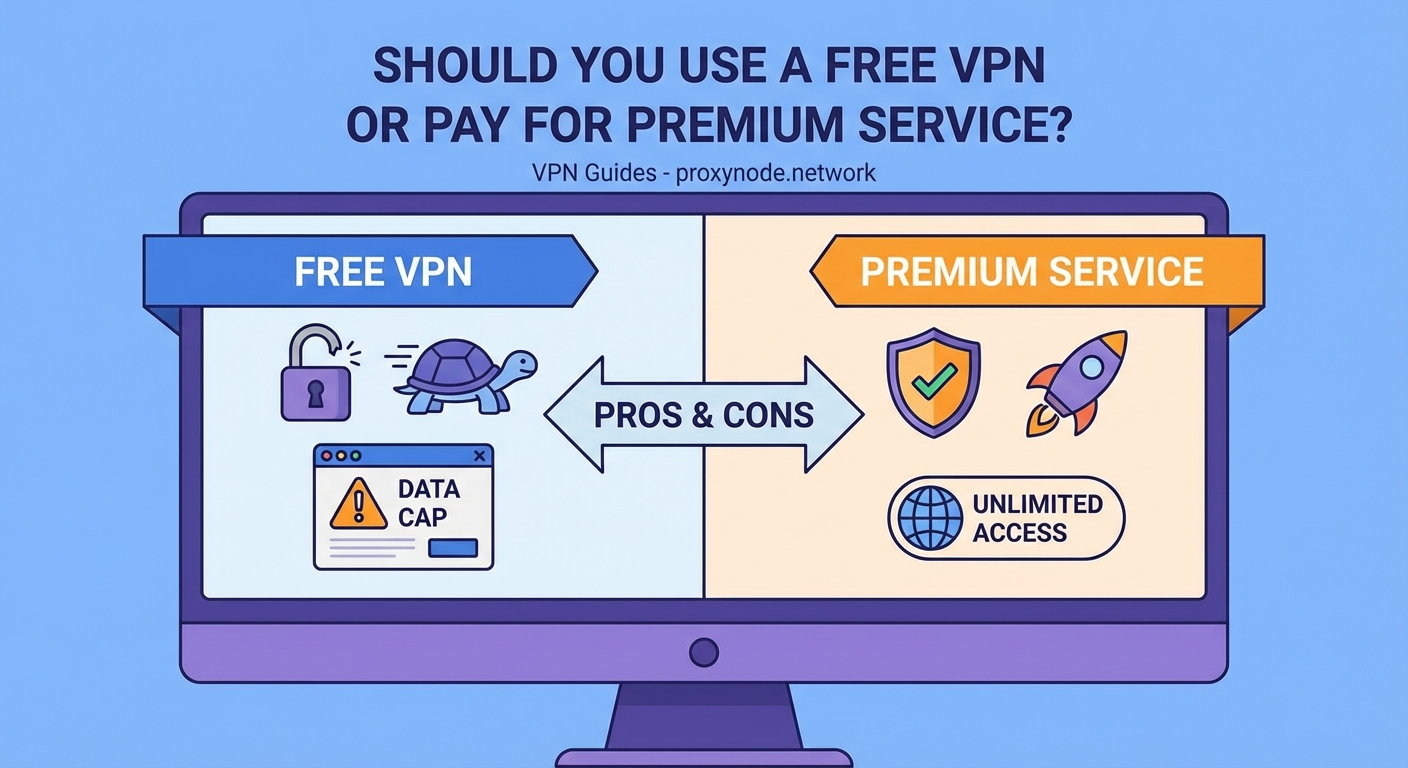
Another tactic involves offering extremely limited free tiers designed to frustrate you into upgrading. You get slow speeds, data caps of 500MB to 2GB monthly, and access to only a handful of server locations. The service becomes barely usable for anything beyond checking email.
Free VPN providers have to pay for servers, bandwidth, and maintenance somehow. If you’re not the customer paying with money, you’re often the product being sold through your data and attention.
Security vulnerabilities that plague free VPN options
Free VPN services frequently use outdated encryption protocols or implement them incorrectly. Some providers use PPTP, an obsolete protocol with known security flaws that governments and hackers can easily break. Others claim to use strong encryption but configure it poorly, leaving gaps in your protection.
Research studies have found that many free VPN apps contain malware or tracking software embedded in their code. These apps can access your contacts, photos, and other sensitive information stored on your device. Some even create backdoors that allow unauthorized access to your system.
DNS leaks represent another critical problem. Your VPN might encrypt your traffic, but if DNS requests leak outside the encrypted tunnel, websites can still track which domains you visit. Many free services lack proper DNS leak protection, exposing your browsing history despite the VPN connection.
Connection logs pose serious privacy risks. Free providers often keep detailed records of your IP address, connection timestamps, and bandwidth usage. If authorities request this information or the company suffers a data breach, your supposedly anonymous activity becomes traceable back to you.
| Security Feature | Free VPN Services | Paid VPN Services |
|---|---|---|
| Encryption strength | Often weak or outdated | AES-256 standard |
| DNS leak protection | Rarely included | Built-in protection |
| Connection logging | Usually extensive | Minimal or none |
| Malware presence | Common in apps | Rare with reputable providers |
| Security audits | Almost never performed | Regular third-party audits |
Performance limitations you’ll face with free services
Speed restrictions make free VPN services frustrating for everyday use. Providers intentionally throttle bandwidth to encourage upgrades, resulting in slow page loads, buffering videos, and failed downloads. Streaming services become essentially unusable.
Server availability creates constant bottlenecks. Free users typically share overcrowded servers with thousands of other people, while paid subscribers get priority access to faster, less congested servers. You’ll experience frequent disconnections and struggle to find working servers during peak hours.
Geographic limitations severely restrict where you can connect. Free tiers usually offer 3 to 5 server locations, often only in major countries like the US, UK, and Netherlands. If you need to access content from specific regions or want to optimize connection speeds by choosing nearby servers, you’re out of luck.
Data caps force you to ration your VPN usage carefully. With monthly limits between 500MB and 10GB, you’ll burn through your allowance quickly. A single HD movie streams about 3GB of data. Regular browsing, email, and light social media use can exhaust your quota within days.
What paid VPN services actually deliver
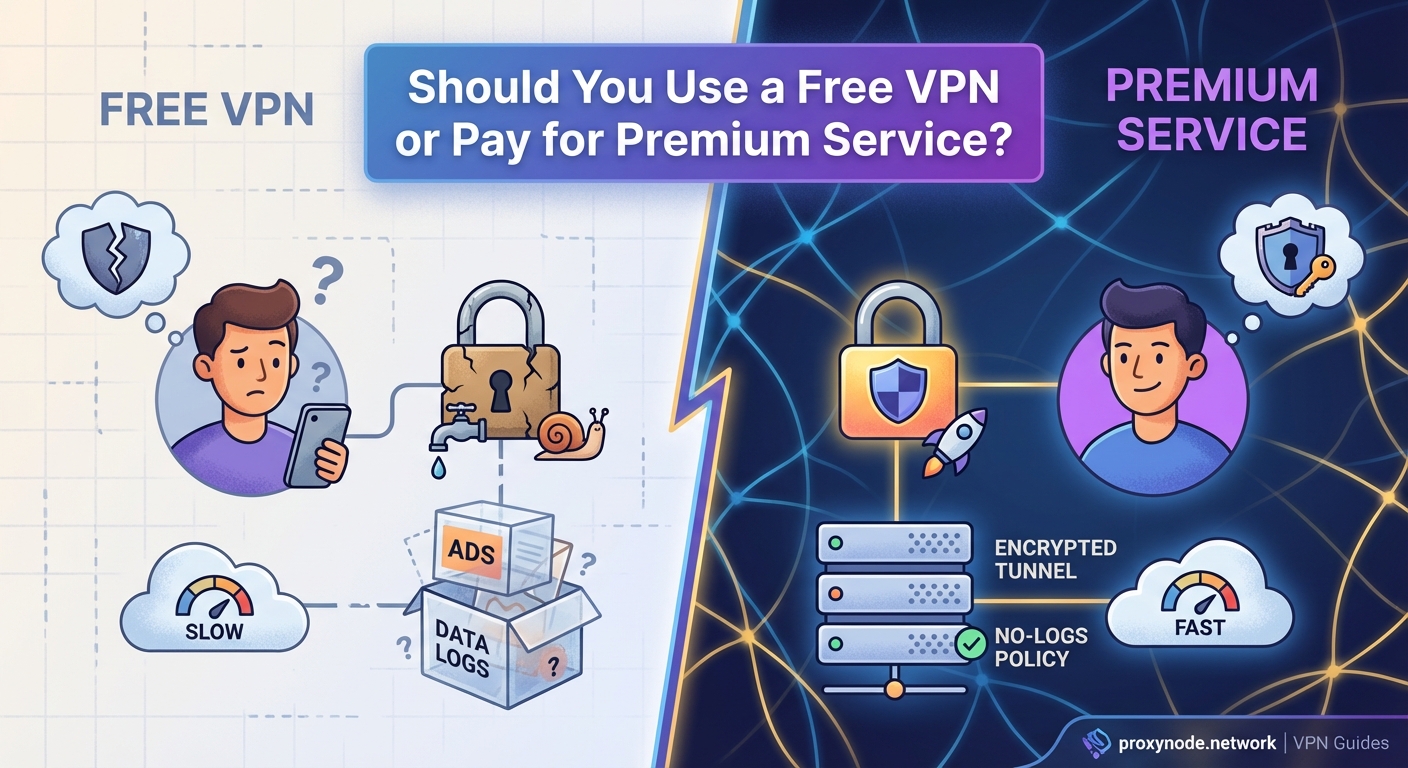
Premium VPN providers maintain extensive server networks spanning 50 to 100+ countries with thousands of individual servers. You can connect to locations worldwide for content access, choose servers optimized for streaming or torrenting, and switch between them freely without restrictions.
Strong encryption protocols protect your data using industry-standard AES-256 encryption combined with secure tunneling protocols like OpenVPN, WireGuard, or IKEv2. These technologies ensure that even if someone intercepts your traffic, they cannot decrypt and read your data.
Strict no-logs policies mean reputable paid providers don’t record your browsing activity, connection times, or IP addresses. Many services publish transparency reports and undergo independent security audits to verify their privacy claims. Some operate under privacy-friendly jurisdictions that legally prohibit data retention.
Additional security features enhance your protection beyond basic VPN functionality:
- Kill switch technology automatically blocks internet traffic if your VPN connection drops
- Multi-hop routing sends your traffic through multiple servers for extra anonymity
- Split tunneling lets you choose which apps use the VPN and which connect directly
- Dedicated IP addresses provide consistent access to services that block shared VPN IPs
- Threat protection blocks malware, trackers, and malicious websites at the network level
Customer support makes a significant difference when technical issues arise. Paid services offer 24/7 live chat, email support, and comprehensive setup guides. Free services rarely provide any support beyond basic FAQs.
Evaluating legitimate free VPN alternatives
A few trustworthy free VPN options exist for users with minimal needs. These providers offer genuinely free tiers without selling your data, but come with clear limitations.
Proton VPN provides unlimited bandwidth on its free tier, making it unusual among free services. You get access to servers in three countries with decent speeds, though not as fast as paid plans. The company has a strong privacy reputation and operates under Swiss privacy laws.
Windscribe offers 10GB monthly data with free registration, enough for moderate browsing and email use. The service includes strong encryption and doesn’t log your activity. You can access servers in about 10 countries on the free plan.
Hide.me provides 10GB monthly with good speeds and strong privacy protections. The free tier doesn’t require payment information and includes access to five server locations. The company maintains a strict no-logs policy verified by independent audits.
These services work well for specific use cases:
- Occasional secure browsing on public WiFi networks at coffee shops or airports
- Light web browsing and email checking without streaming or large downloads
- Testing VPN functionality before committing to a paid service
- Backup protection when your primary paid VPN experiences issues
Making the right choice for your privacy needs
Your decision between free and paid VPN services depends on how you’ll actually use the protection.
Choose a paid VPN service if you:
- Stream video content regularly on Netflix, Hulu, or other platforms
- Download large files or use torrenting services
- Need consistent protection for all your devices throughout the day
- Handle sensitive information for work or personal finances
- Travel frequently and require reliable security on public networks
- Want access to servers in specific countries for content or privacy reasons
Consider a legitimate free VPN option if you:
- Only need occasional protection for specific tasks
- Browse casually without streaming or downloading
- Can work within strict monthly data limits
- Don’t require access to many server locations
- Want to test VPN services before purchasing
Cost considerations vary by provider and commitment length. Monthly paid VPN subscriptions typically run $10 to $13, but annual plans drop the cost to $3 to $5 monthly. Two-year commitments often reduce prices further to $2 to $3 monthly.
Budget-conscious users can find middle ground solutions. Many paid providers offer 30-day money-back guarantees, letting you test premium features risk-free. Some services provide discounted student plans or allow account sharing across multiple devices.
Common mistakes people make when choosing VPN services
Falling for fake reviews and sponsored recommendations leads many users astray. Some websites promote specific VPN services purely for affiliate commissions, not actual quality. Always check multiple independent sources and look for detailed technical testing rather than vague praise.
Ignoring jurisdiction matters more than most people realize. VPN companies based in countries with mandatory data retention laws or intelligence-sharing agreements may be legally compelled to log and share your information. Services operating from privacy-friendly locations like Switzerland, Panama, or the British Virgin Islands offer stronger legal protections.
Trusting marketing claims without verification creates false security. Any VPN can claim “military-grade encryption” or “complete anonymity,” but only independent audits and transparency reports prove these assertions. Look for services that publish regular security audits from reputable firms.
Choosing based solely on price often backfires. The cheapest paid VPN isn’t always the best value if it has slow speeds, poor customer support, or questionable privacy practices. Similarly, the most expensive option doesn’t guarantee superior service. Focus on features that match your specific needs.
Overlooking device compatibility causes frustration after purchase. Ensure your chosen VPN supports all devices you use, including smartphones, tablets, computers, and routers. Check how many simultaneous connections the service allows if you need protection across multiple devices.
Privacy vs convenience tradeoffs you need to understand
Using any VPN service requires accepting some performance impact. Encrypting your traffic and routing it through remote servers adds latency and reduces speeds compared to direct connections. Paid services minimize this impact, but it never completely disappears.
Some websites and services actively block VPN connections. Banking sites, streaming platforms, and government portals often restrict access from known VPN IP addresses to prevent fraud or enforce geographic restrictions. You’ll need to disconnect your VPN for these services or use providers with dedicated IP options.
Mobile VPN usage drains battery faster than normal browsing. The constant encryption and connection maintenance requires additional processing power. This becomes particularly noticeable on older devices or during extended use away from chargers.
VPN protection only covers internet traffic, not all privacy threats. Your VPN provider can see your traffic even if others cannot. Browser fingerprinting, tracking cookies, and social media surveillance operate independently of VPN protection. Comprehensive privacy requires combining VPN use with other tools like privacy-focused browsers and ad blockers.
Real-world scenarios where VPN choice matters most
Public WiFi networks at airports, hotels, and cafes represent high-risk environments where VPN protection becomes essential. Free VPNs might seem adequate for checking email, but if that email contains password reset links, financial information, or work documents, the security weaknesses of free services create real vulnerability.
Remote work situations demand reliable VPN connections for accessing company resources and protecting sensitive business data. Free services with data caps and unreliable connections can interrupt video calls, prevent file uploads, and create security gaps that violate company policies.
International travel introduces additional complications. You might need VPN access to bypass censorship in restrictive countries, access banking services that block foreign IP addresses, or maintain access to streaming subscriptions tied to your home country. Free VPNs rarely provide the server variety and reliability needed for these situations.
Content creators and journalists working with confidential sources require absolute privacy and security. Free VPN services that log connections or sell browsing data create unacceptable risks for source protection and story security. Professional-grade paid services become necessary tools rather than optional conveniences.
Getting started with your VPN choice
Start by identifying your specific needs before comparing services. Write down what you’ll actually use the VPN for, how much data you typically consume monthly, which devices need protection, and what your budget allows.
Test services using trial periods and money-back guarantees. Most reputable paid VPN providers offer 30-day refund windows. Install the service, use it normally for a week, and evaluate whether speeds, reliability, and features meet your expectations.
Check for these essential features regardless of whether you choose free or paid:
- Strong encryption using modern protocols like OpenVPN or WireGuard
- Clear privacy policy stating what data is collected and retained
- Kill switch protection to prevent data leaks if connection drops
- DNS leak protection to ensure all traffic routes through encrypted tunnel
- Regular security updates and responsive customer support
Read the actual privacy policy, not just marketing claims. Look for specific statements about logging practices, data retention periods, and circumstances under which information might be shared with authorities or third parties.
Why your VPN decision shapes your digital security
The free VPN vs paid VPN choice fundamentally affects how much control you maintain over your digital privacy. Free services often create new privacy risks while claiming to solve them, turning your VPN into a surveillance tool rather than a protection mechanism.
Paid VPN services aren’t perfect, but reputable providers align their business model with user privacy. They profit from subscriptions rather than data sales, creating incentive to actually protect your information. The transparency, security features, and reliable performance justify the cost for most privacy-conscious users.
Your specific situation determines the right choice. Casual users with minimal needs might function adequately with legitimate free options like Proton VPN or Windscribe. Anyone handling sensitive information, streaming regularly, or requiring consistent protection should invest in paid services.
Start with a clear-eyed assessment of what you actually need, test services thoroughly before committing, and remember that the cheapest option often costs more in compromised privacy and frustration than a quality paid service would have cost upfront.